

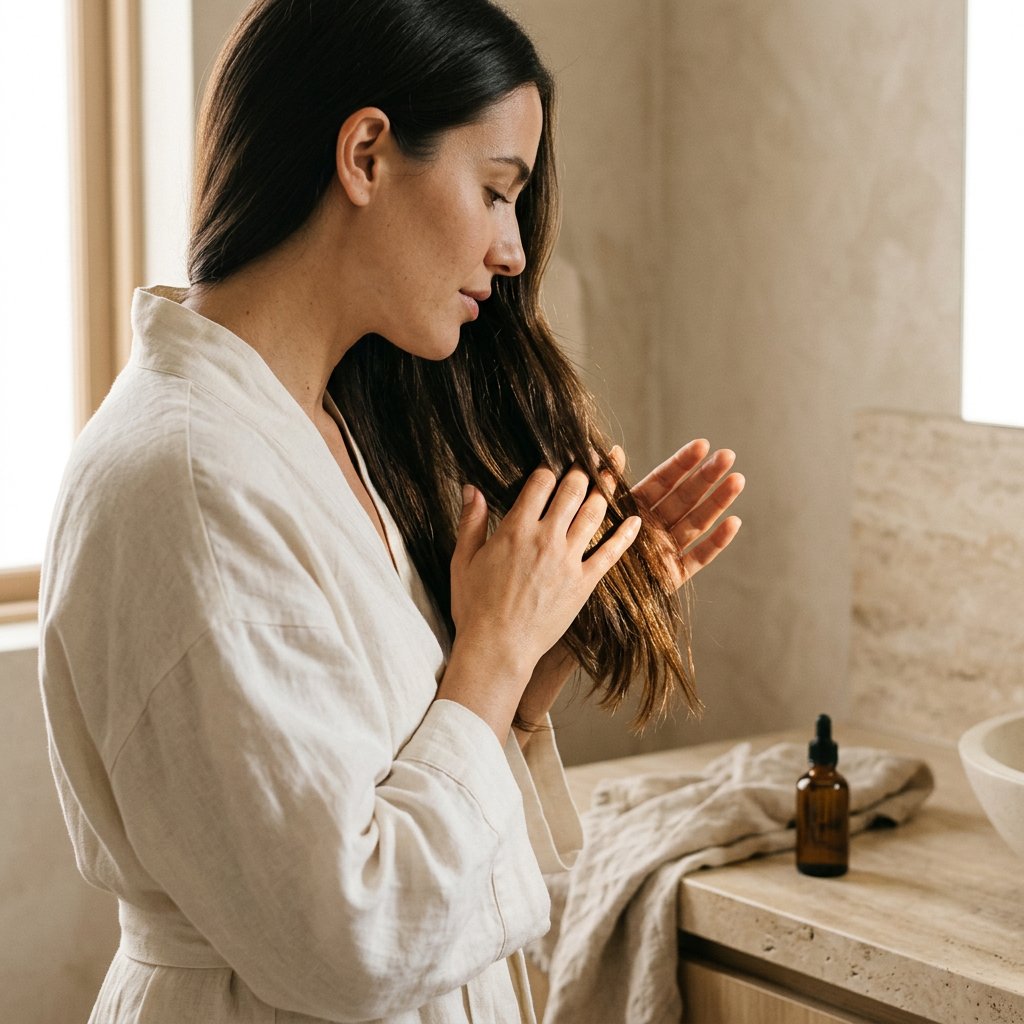
How to Apply Hair Oil and How Much to Use
- Start small. If you're using a dropper bottle, try one or two drops, unless the label says otherwise. One pump doesn't necessarily dispense the same amount.
- Spread a thin layer of oil over both palms. This keeps all the oil from ending up in one spot.
- Work through the lengths and ends in small sections. Distribute the oil with your fingers or gently with a wide-tooth comb; hair brushes can also help spread oil evenly from mid-lengths to ends.
- Feel how your hair responds before adding more. The right amount depends on your hair's length and density, as well as the formula: fuller hair needs a different amount than fine hair.
When Should You Use Hair Oil in Your Routine?
The right time depends on the product and how you style your hair.
| When | Hair condition | Leave in or wash out? | What to keep in mind |
|---|---|---|---|
| Before washing | Dry or damp, according to the product instructions. | How long to leave it in and whether to wash it out depend on the product. | With Mielle, too, how you use the oil depends on the specific formula. Follow the label for how to apply it, how long to leave it in, and how to wash it out. |
| After washing | Towel-dried rather than soaking wet: a practical starting point, especially for fine hair that gets weighed down easily. | Leave a leave-in oil in your hair. | Use a suitable heat protectant before blow-drying. Hair oil only counts as heat protection if the product explicitly says so. |
| On dry hair | Dry lengths and ends, after blow-drying or between styling sessions. | Leave a leave-in oil in your hair. | After blow-drying, use oil as a finishing product, separate from the protection used during blow-drying. |
What Does Hair Oil Do for Your Hair?
Hair oil can help smooth the hair's surface and reduce moisture loss. Oil itself doesn't add water, so it's not the same as adding moisture. A smoother surface can make your hair feel softer, look shinier, and fall into place more easily. Frizz may also become less noticeable. Damaged or split ends may temporarily look smoother, but hair oil doesn't permanently repair split ends. The effect is cosmetic, not a repair of the hair fiber.
Which Hair Oil Is Right for Your Hair?
The best hair oil suits both your hair texture and the results you want. The complete formula and how your hair responds to it matter more than any one popular ingredient.
| Hair type or need | Formula features to look for | What to consider when choosing |
|---|---|---|
| Fine hair | A lightweight formula that spreads in a thin layer. Jojoba is one possible ingredient in this type of product. | Jojoba alone doesn't guarantee your hair won't feel weighed down. The concentration, other ingredients, and amount applied also determine whether your hair keeps its volume. |
| Thick, coarse, or curly hair | A richer formula may suit hair that needs more softness and flexibility. Coconut oil is one possible choice. | Not all curls need the same care. Fine curls can get weighed down more easily than thick curls; choose the richness of the formula accordingly. |
| Dry, frizzy, or damaged hair | A smoothing formula, such as one with argan oil, designed for manageability and a polished finish. | There is no single best oil for frizz. Choose based on the results: do your lengths move freely and look smoother without feeling greasy? |
| Preference for pure plant-based oil | A single plant-based oil with no added ingredients. The properties vary by type of oil. | Pure doesn't automatically mean lighter or more suitable. A plant-based oil can also leave a finish that's too rich for your hair texture. |
| Preference for a blended hair oil | A combination of ingredients, possibly including silicones that make the hair's surface feel smoother. | Silicone-free isn't automatically better. A blended formula can spread easily; the product as a whole determines the feel and finish. |
How Often Does Your Hair Need Oil?
There is no set frequency that works for everyone. Let the product instructions, your wash schedule, and how your hair feels guide how often you use it. A treatment before or after washing with shampoos is different from touching up with a leave-in oil between washes. After cleansing, consider conditioners to help lock in moisture. Daily use isn't necessary. Does your hair feel greasy, do strands clump together, or are you losing volume? Use oil less often. To stretch the time between wash days, read How to use dry shampoo. Don't reapply while there's still enough product on your hair.
Wear Extensions? Take Extra Care Here
- Our Remy human hair extensions and synthetic extensions need care suited to their material. An oil for human hair isn't automatically suitable for synthetic hair.
- Follow the care instructions for your extension type. When Caring for and washing tape extensions, keep oil away from the tapes and other attachment areas, unless the supplier says otherwise.
- Choose products with instructions suited to the material and attachment method of your extensions.


